
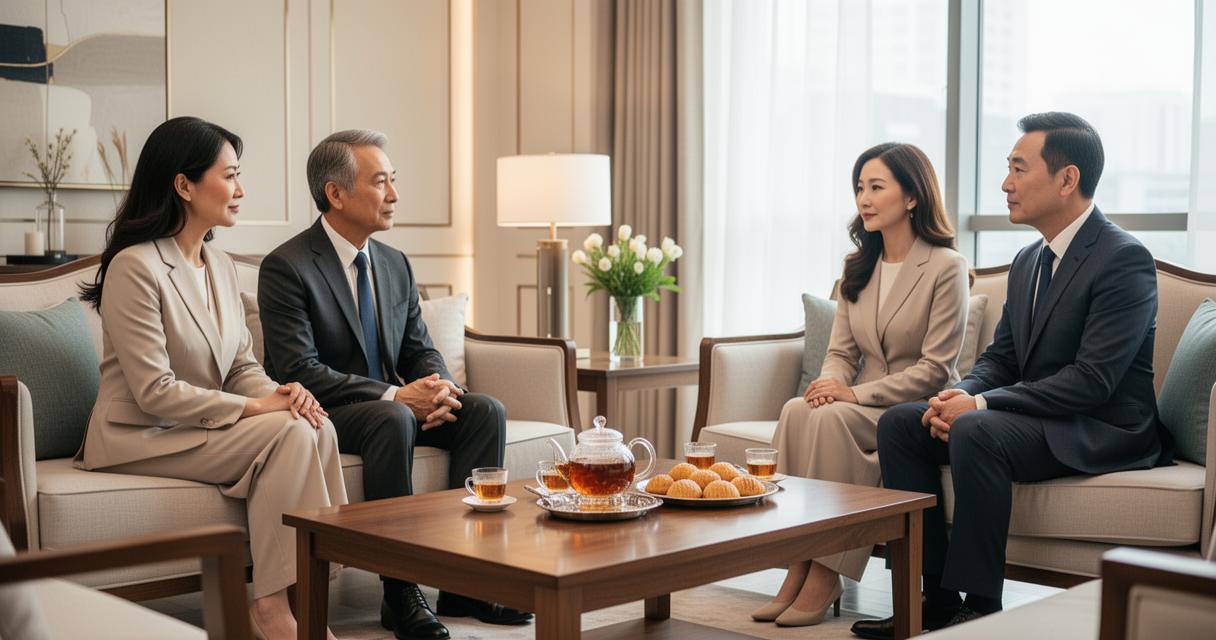
For families navigating the early stages of a marriage proposal within an Islamic framework, the mouqabala, or formal meeting between prospective spouses and their families, represents a pivotal and often nerve-wracking milestone. This gathering is far more than a simple introduction; it is a carefully structured occasion rooted in modesty, respect, and religious guidance, designed to allow two families to assess compatibility whilst remaining firmly within the bounds of what is permissible. Understanding the etiquette surrounding this meeting, including the seemingly small but deeply meaningful gesture of serving tea and refreshments, can make the difference between an awkward encounter and one that lays a genuine foundation for a blessed union.
The essentials
- The mouqabala is a formal, structured meeting between prospective spouses and their families designed to assess compatibility within the bounds of Islamic principles.
- Islamic tradition emphasizes family involvement and the presence of a mahram to ensure that interactions remain dignified, respectful, and free from ambiguity.
- The serving of tea and refreshments serves as a gesture of hospitality that helps settle nerves and reflects the family’s commitment to kindness and generosity.
- Preparing and serving halal refreshments signals a family’s dedication to religious observance and provides insight into their values and lifestyle.
- Participants are expected to adhere to modesty in dress and conduct, reflecting broader Islamic rulings that discourage practices considered forbidden.
- Starting the marriage process with sincerity, transparency, and family guidance helps establish a stable and blessed foundation for the couple’s future relationship.
Understanding the Mouqabala: Islamic Principles and Family Involvement in Marriage Meetings
The Religious Foundation of Mouqabala in Islamic Tradition
The practice of meeting a prospective spouse under family supervision draws directly from teachings found in the Quran and Hadith, which emphasise that marriage should be approached with clarity, honesty, and mutual consent. Rather than leaving young people to navigate romantic relationships in isolation, Islamic tradition encourages a structured process where families act as facilitators, ensuring that any interaction remains dignified and free from ambiguity. This is particularly relevant for someone who has recently embraced Islam, such as a new Muslim whose parents may not share the same faith. In such cases, Christian parents who agree to participate in an Islamic wedding often find themselves learning the customs alongside their child, and the mouqabala becomes an early opportunity to demonstrate how sharee’ah compliance shapes even the smallest details of courtship.
The Role of Families in Facilitating Halal Introductions Between Prospective Spouses
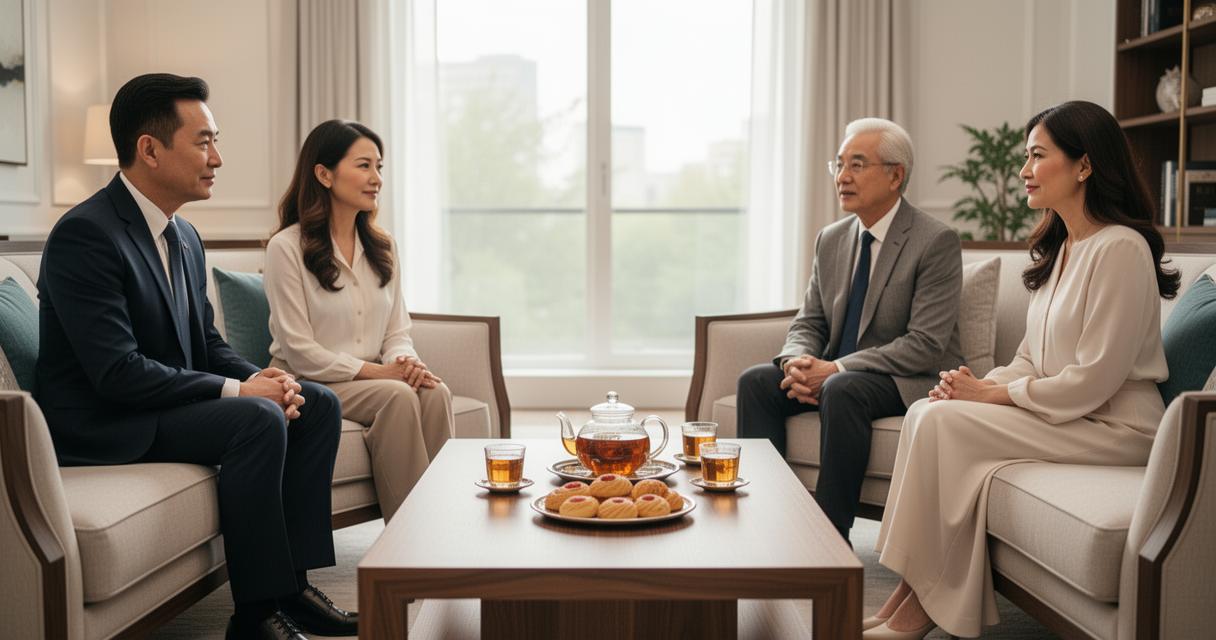
Family involvement is not merely traditional flavour; it is central to ensuring a halal marriage ceremony process from the very first meeting. Parents, siblings, or other relatives typically attend to observe the interaction, which helps maintain appropriate boundaries and offers guidance that neither party may think to seek independently. This is where concepts such as mahram relationships and gender segregation become particularly important, as the presence of a mahram during any meeting between unmarried men and women preserves the integrity of the encounter. Families often discuss practicalities too, including where the meeting will take place, and it is not uncommon for such gatherings to occur at a family home with light refreshments prepared in advance, setting a tone of warmth without crossing into anything resembling free mixing.
The Symbolism of Hospitality: Why Tea and Refreshments Hold Cultural and Religious Significance
Creating a welcoming atmosphere through traditional islamic hospitality
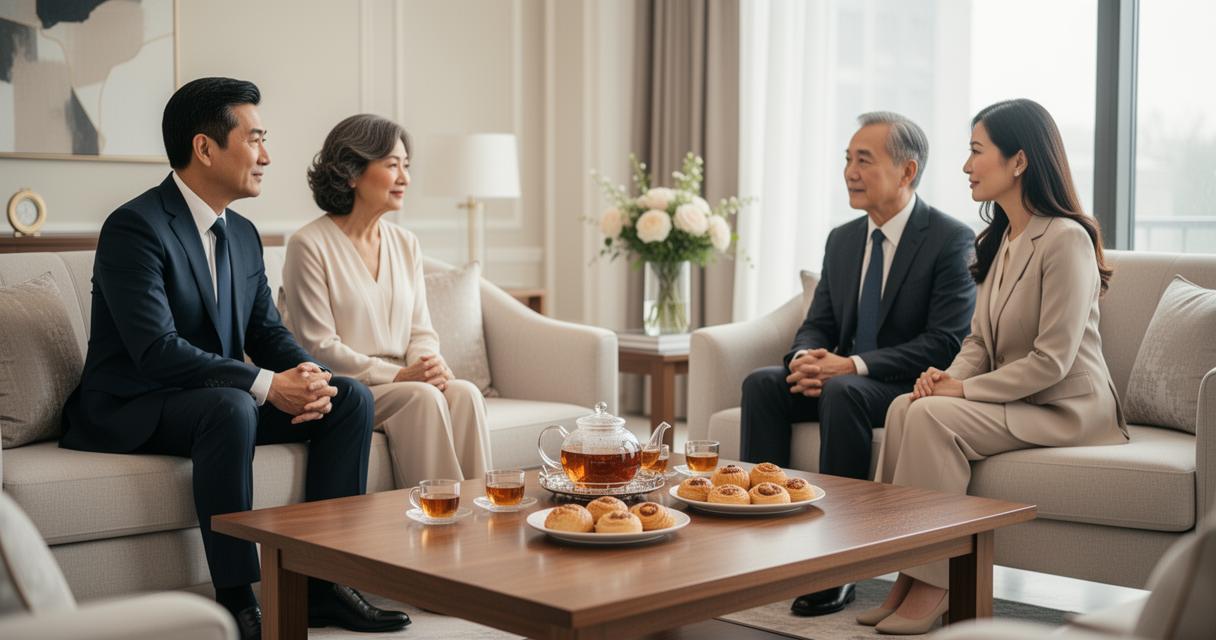
Hospitality holds a cherished place within Islamic culture, and the act of offering tea, sweets, or light refreshments during a mouqabala is never accidental. It reflects the Prophet’s teachings on generosity and kindness towards guests, transforming what could be a tense formal assessment into a gentle, welcoming occasion. The simple ritual of pouring tea allows both families a moment to settle nerves, exchange pleasantries, and observe one another’s manners in a relaxed setting. For many households, this gesture is considered as important as the conversation itself, since it demonstrates that the family hosting the meeting values comfort and respect above formality.
How Sharing Food and Drink Reflects Character and Family Values in Marriage Discussions
Beyond mere courtesy, the way refreshments are prepared and served can offer subtle insight into a family’s values. A household that ensures everything offered is halal food, free from anything haram, signals a commitment to religious observance that often extends into how they will support the couple long after the meeting concludes. This attentiveness matters greatly, particularly given that alcohol prohibition and pork prohibition are non-negotiable aspects of any Islamic gathering, wedding-related or otherwise. Some families even reference the walimah, the marriage feast established by the Prophet, as the model for hospitality throughout the entire courtship and wedding process, recognising that no authentic evidence supports elaborate separate feasts hosted by the bride’s family beyond this established practice.
Preparing for a Successful Mouqabala: Practical Guidance for Young Couples and Their Families
What Both Men and Women Should Know Before Attending a Marriage Meeting
Preparation for this meeting involves more than simply showing up with good intentions. Both men and women are expected to dress modestly, reflecting broader Islamic rulings on appearance and conduct. Women are generally advised to avoid tattoos, hair extensions, and eyebrow plucking, alongside choosing dress that does not reveal the shape of the body, whilst men are encouraged to maintain beard preservation and wear clothing that does not hang below the ankle. These guidelines are not arbitrary; they stem from a broader framework discouraging forbidden practices that could compromise the sincerity of the occasion. Photography restrictions are also worth considering at this early stage, as many families prefer to avoid documenting the meeting altogether, reserving such customs for later, more appropriate celebrations.
Long-term implications: building strong marital foundations through proper islamic courtship
Approaching the mouqabala with sincerity and adherence to Islamic guidance often sets the tone for the entire relationship that follows. Couples who begin their journey grounded in respect, modesty, and family involvement frequently report greater harmony once married, largely because the foundation was built on transparency rather than secrecy. This extends into later decisions too, such as avoiding extravagant spending during the walimah or reconsidering customs like exchanging wedding rings, which some scholars discourage as imitative of non-Islamic practices. Ultimately, a blessed marriage tends to emerge not from grand gestures, but from consistent, small acts of sincerity, beginning with something as unassuming as a shared cup of tea between two families hoping to build something lasting together.